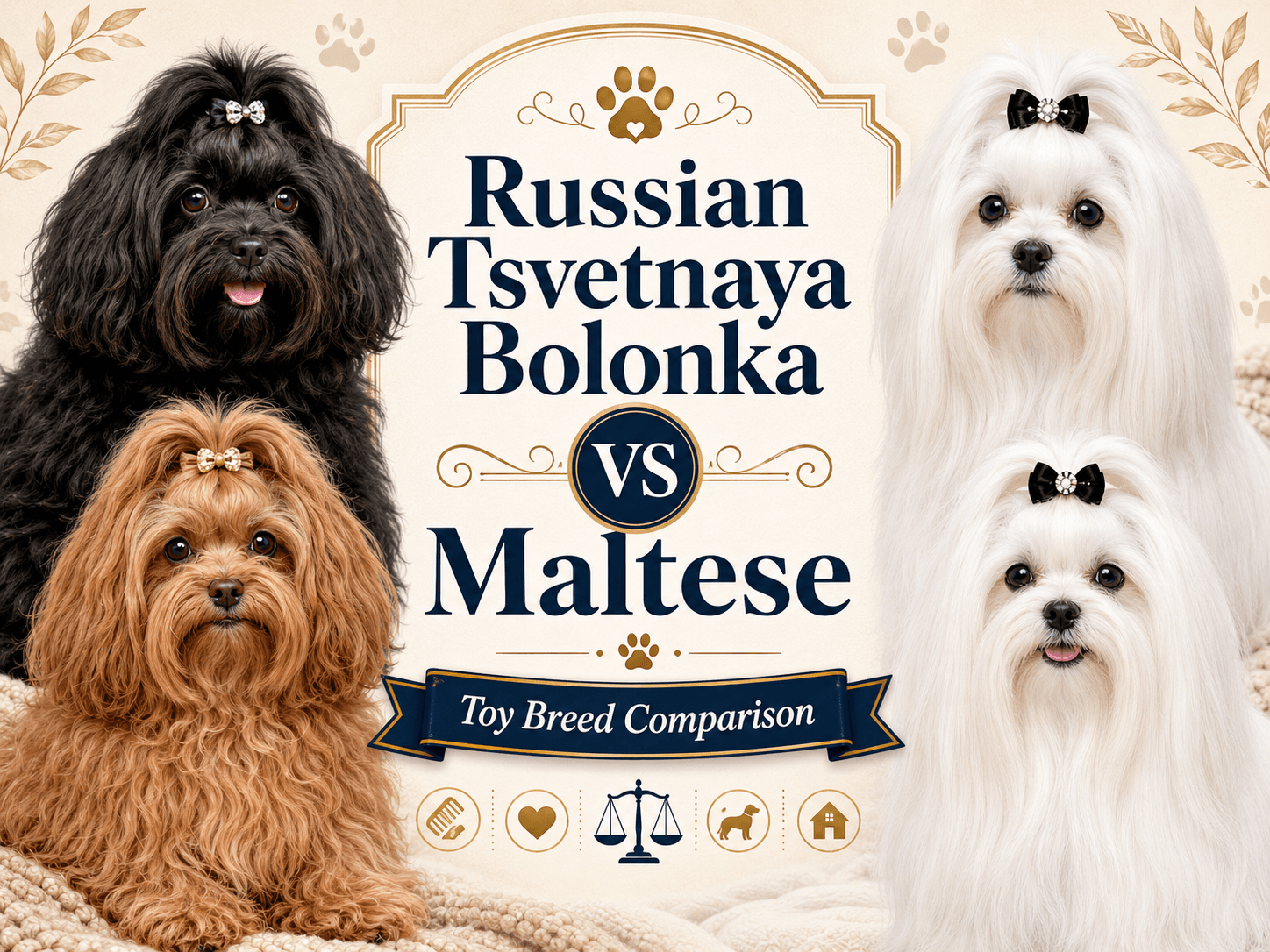
Two Toy Breeds, Three Millennia Apart
The Maltese is one of the oldest documented dog breeds on Earth — historical records of small white lapdogs in Mediterranean trade routes date back more than 2,800 years. The Russian Tsvetnaya Bolonka is at the other end of the timeline: developed in mid-20th century Russia and only AKC-recognized in January 2026. Both belong to the Bichon family of small companion lapdogs, but their development arcs could not be more different.
Side-by-Side Comparison
| Trait | Russian Tsvetnaya Bolonka | Maltese |
|---|---|---|
| Weight | 4.5–11 lbs | Under 7 lbs |
| Height | 9–10 in | 7–9 in |
| Lifespan | 14–20 years | 12–15 years |
| Coat | Wavy/curly double coat | Silky straight long coat (single) |
| Colors | Black, brown, chocolate, blue, gray, red, fawn | Solid white only |
| Hypoallergenic | Yes | Yes |
| Build | Sturdy | Fragile (small bones) |
| Grooming intensity | Moderate (2-3x/week brushing) | High (daily brushing) |
| Rarity (US) | Very rare | Common |
| AKC year | 2026 (Toy) | 1888 (Toy) |
| Typical price | $3,000–$4,500 | $1,500–$3,500 |
Size and Build
Maltese are among the smallest toy breeds — the AKC standard caps adult weight at 7 pounds, and many adults are 4-6 pounds. That extreme small size comes with fragile bone structure. Russian Tsvetnaya Bolonki are slightly larger and have a noticeably sturdier build for their size, making them more forgiving for households with older children or active homes. Both still require careful supervision around very young children.
Coat Care Differences
The Maltese's long, silky, single coat tangles easily and traditionally requires daily brushing to prevent matting. Many owners keep them in a short "puppy cut" for practicality. The Russian Tsvetnaya Bolonka's wavy/curly double coat needs brushing 2-3 times per week — meaningfully less demanding. The Bolonka's colored coats also hide tear-staining and dirt that show clearly on a white Maltese.
Which Breed Should You Choose?
Choose the Maltese if you want the smallest possible toy breed, love the classic all-white appearance, and have time for daily coat maintenance. Choose the Russian Tsvetnaya Bolonka if you want a sturdier build, exceptional longevity (14-20 years), a colored coat, less intensive grooming, or specifically value the AKC-2026 recognition and the breed's rarity.
Frequently Asked Questions
Which is smaller, a Bolonka or a Maltese?
Maltese are generally smaller. The Maltese breed standard caps weight at 7 pounds; many adult Maltese weigh 4-6 pounds. Bolonki range 4.5-11 pounds, so a small Bolonka and a large Maltese overlap, but the Maltese has a tighter top end.
Are Maltese and Bolonka in the same breed family?
Yes, both are members of the Bichon family of small companion dogs. They share Mediterranean ancestry but diverged hundreds of years ago. The Maltese is among the oldest documented dog breeds (2,800+ years); the Russian Tsvetnaya Bolonka is one of the youngest AKC-recognized breeds (January 2026).
Which has the easier coat to maintain?
The Bolonka. The Maltese's long, silky, single coat tangles easily and requires daily brushing to prevent matting. Many Maltese owners keep them in a short 'puppy cut' for practicality. The Bolonka's wavy/curly double coat needs brushing 2-3 times per week — less demanding overall.
Which lives longer?
The Russian Tsvetnaya Bolonka. Bolonki typically live 14-20 years; Maltese 12-15 years. Both are long-lived, but the Bolonka has a longer ceiling.
Are both good with children?
Both can be excellent family dogs when properly socialized. The Maltese's smaller size and more fragile bone structure makes it less suitable for households with very young children who might handle the dog roughly. The Bolonka's sturdier build is more forgiving — though all toy breeds need careful supervision around small kids.
Which is rarer?
The Russian Tsvetnaya Bolonka is dramatically rarer in the US. The Maltese has been popular for centuries and has hundreds of US breeders; Bolonki have fewer than a dozen serious US breeders.